Relocating to Providence County: A Practical Guide
May 14, 2026
May 14, 2026
Thinking about a move to Providence County? You are not alone, and you are not imagining the tradeoffs. This is a market with real variety, from historic city neighborhoods to more suburban settings, and that means your best fit depends on how you want to live day to day. In this guide, you will get a practical look at housing, neighborhood types, commute patterns, and what to expect during your search so you can relocate with more confidence. Let’s dive in.
Providence County had an estimated 678,179 residents and 278,586 housing units as of July 2024. Census data also shows an owner-occupied housing rate of 56.9%, a median owner-occupied home value of $373,600, and a median gross rent of $1,312.
Those numbers help frame the market, but they do not tell the whole story. Current listing data points to a more competitive environment, with Realtor.com describing Providence County as a seller’s market and placing the median home sale price around $449,900. If you are relocating, that means preparation matters, especially if you want to move on a specific timeline.
One of the biggest surprises for relocating buyers is how varied the housing stock feels across the county. Rhode Island’s 2025 housing report says the state’s median housing unit was built in 1964, while Providence city’s median year built is 1939.
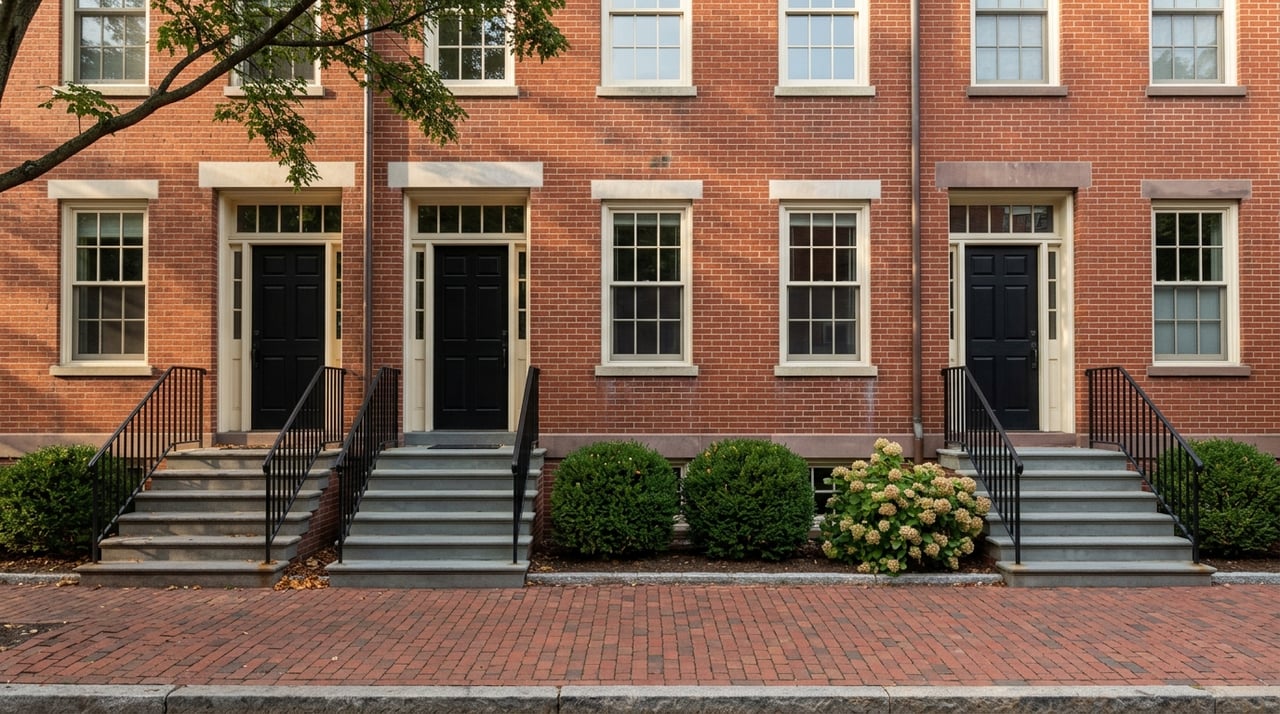
In practical terms, you will see a lot of older homes, established streetscapes, and properties that may need ongoing upkeep. That can be part of the appeal, especially if you want architectural character, but it also means you should pay close attention to condition, maintenance history, and improvement plans.
Providence has 25 official neighborhoods, and the city has completed neighborhood plans across multiple areas, including Downtown, College Hill, Wayland, Fox Point, Elmhurst, Mount Pleasant, Federal Hill, Reservoir, and the Waterfront. For you as a buyer, that means Providence is not one single market. It is a group of smaller submarkets with different housing types, lot sizes, street patterns, and daily routines.
You may find condos and multifamily buildings in some parts of the city, historic urban homes in others, and a different pace from one neighborhood to the next. If your relocation plan includes city living, it helps to compare several areas instead of focusing too quickly on one name you already recognize.
Outside the urban core, Providence County includes a broad mix of suburban and edge-town housing. The state housing report shows median year-built figures such as 1961 in Warwick, 1958 in Cranston, 1958 in East Providence, 1968 in Johnston, 1970 in North Providence, 1947 in Pawtucket, and 1976 in Smithfield.
That mix points to a county with pre-war homes, mid-century properties, and later single-family houses rather than one standard suburban product. If you are searching outside Providence city, you may still see older homes and mature neighborhoods, but often with different lot configurations, road layouts, and home styles than you would find in the city.
When people say they are moving to Providence, they often mean very different things. Some want a more urban setting with a compact feel and easier access to transit or downtown destinations. Others want a quieter residential layout, a different housing footprint, or more separation from the city center.
The key is to match your home search to your routine. Think about how often you commute, how much space you want, how comfortable you are with older housing, and whether you prefer a denser street grid or a more suburban layout.
Providence city offers a more urban pattern of living and commuting. According to the Providence comprehensive plan, 52% of working Providence residents work in the city, 28% work elsewhere in Providence County, and 20% work outside the county.
The same plan reports that 65% drive or carpool, 8.1% walk, 5.4% use public transportation, 1.1% bike, and 7.2% work from home. If you want more transportation options, Providence’s core may give you flexibility that is harder to find in less centralized areas.
Providence County supports a lot of local movement without requiring a major regional commute for everyone. Rhode Island commuting data shows 69.5% of employed Providence County residents work in Providence County, 81.0% work somewhere in Rhode Island, and 17.7% work in Massachusetts.
That matters if you are relocating for work or trying to balance multiple routines in one household. You may be able to keep your daily life fairly local, but cross-border commuting to Massachusetts is still a meaningful part of the picture for some buyers.
Commuting in Providence County is manageable for many households, but your experience will depend heavily on where you live and how you travel. Census data puts the county’s mean travel time to work at 25.9 minutes.
For transit users, Providence is a strong hub. RIPTA says nearly all routes connect through Providence, Providence Station offers Amtrak and MBTA regional commuter rail service to Boston, and the T.F. Green Airport InterLink connects riders to the airport and commuter rail. The airport also notes that travelers can take 20 daily weekday MBTA commuter rail trains from the airport to Boston with stops in Providence.
If you plan to drive, it is smart to factor in construction and detours. RIDOT advisories list active lane, ramp, and bridge work on I-95, I-195, Route 10, and I-295 in and around Providence and Warwick through 2026 and 2027.
Older housing is one of Providence County’s defining features, and in Providence city it can shape your ownership experience in very practical ways. Character can be a major draw, but older homes often come with more maintenance needs and more planning around updates.
If you are considering a property in one of Providence’s local historic districts, exterior work may require review before permits are issued. The Providence Historic District Commission says there are eight local historic districts with about 2,600 properties, and exterior changes may involve a certificate of appropriateness or an exemption.
That does not mean you should avoid these homes. It simply means you should understand the approval path early, especially if your relocation plan includes near-term exterior improvements.
Providence also has programs that can matter for older owner-occupied homes. The city offers a deferred-payment, 0% interest CDBG home repair program for owner-occupied properties, along with Lead Safe Providence loans that are forgivable after three years for owner-occupied homes and after five years for non-owner-occupied properties.
If you are evaluating an older property in the city, these programs are worth knowing about. They can help you think more clearly about cost, safety, and the timing of future work.
Relocating buyers often need to make decisions before they can spend much time on the ground. That is increasingly normal. NAR’s 2024 Generational Trends report says 88% of buyers used a real estate agent, 72% used a mobile or tablet search device, 52% found the home through the internet, the median search lasted 10 weeks, and the typical buyer viewed seven homes.
The same report says 33% of buyers found virtual tours very useful. Providence County is well suited to that style of search, especially because Census data shows 94.0% of households have a computer and 90.5% have broadband service.
For you, that means a strong relocation strategy can include virtual showings, digital listing review, floor plan analysis, and careful neighborhood context before you travel. A well-organized search process can save time and help you narrow choices more efficiently.
If you are buying your first home, Rhode Island has programs that may help. RIHousing says first-time buyers using its loan programs must complete homebuyer education before closing, and those classes are available virtually or online.
RIHousing’s Extra Assistance program currently offers up to $20,000 for eligible first-time buyers purchasing a one- to four-family home or condominium as a primary residence, with a minimum credit score of 620. In Providence city, the city also says it provides up to $20,000 in down payment and closing-cost assistance to income-eligible homebuyers purchasing in the city.
These programs can be meaningful if you are trying to preserve cash for moving costs, repairs, or reserves. If you think you may qualify, it is smart to explore that early in your planning process.
Rhode Island closings can feel more document-heavy than buyers expect, especially if you are coming from another state. The Rhode Island Department of Business Regulation says a non-attorney title insurance agent may conduct a residential closing only if the required disclosure is used, and that such an agent cannot give legal advice.
The state’s closing guidance also references the purchase and sales agreement, preliminary approval, final closing disclosure, and outreach to the closing attorney at least one week before closing. If you are relocating, this is another reason to stay organized and build enough time into your move.
For older Providence properties, add one more step to your due diligence. Before planning exterior work, confirm whether the home is in a local historic district, since that can affect review and permit timing.
A relocation move tends to go more smoothly when you focus on a few practical filters first. In Providence County, these are often more helpful than starting with a long list of neighborhood names.
Consider these questions as you shape your search:
The more clearly you answer those questions, the easier it becomes to spot the right fit and avoid wasting time on homes that do not match your daily life.
If you are relocating to Providence County and want hands-on guidance, local market context, and a smooth search process from first tour to closing, James Hall can help you move with clarity and confidence.
Stay up to date on the latest real estate trends.



Get assistance in determining the current property value, crafting a competitive offer, writing and negotiating a contract, and much more. Contact me today.