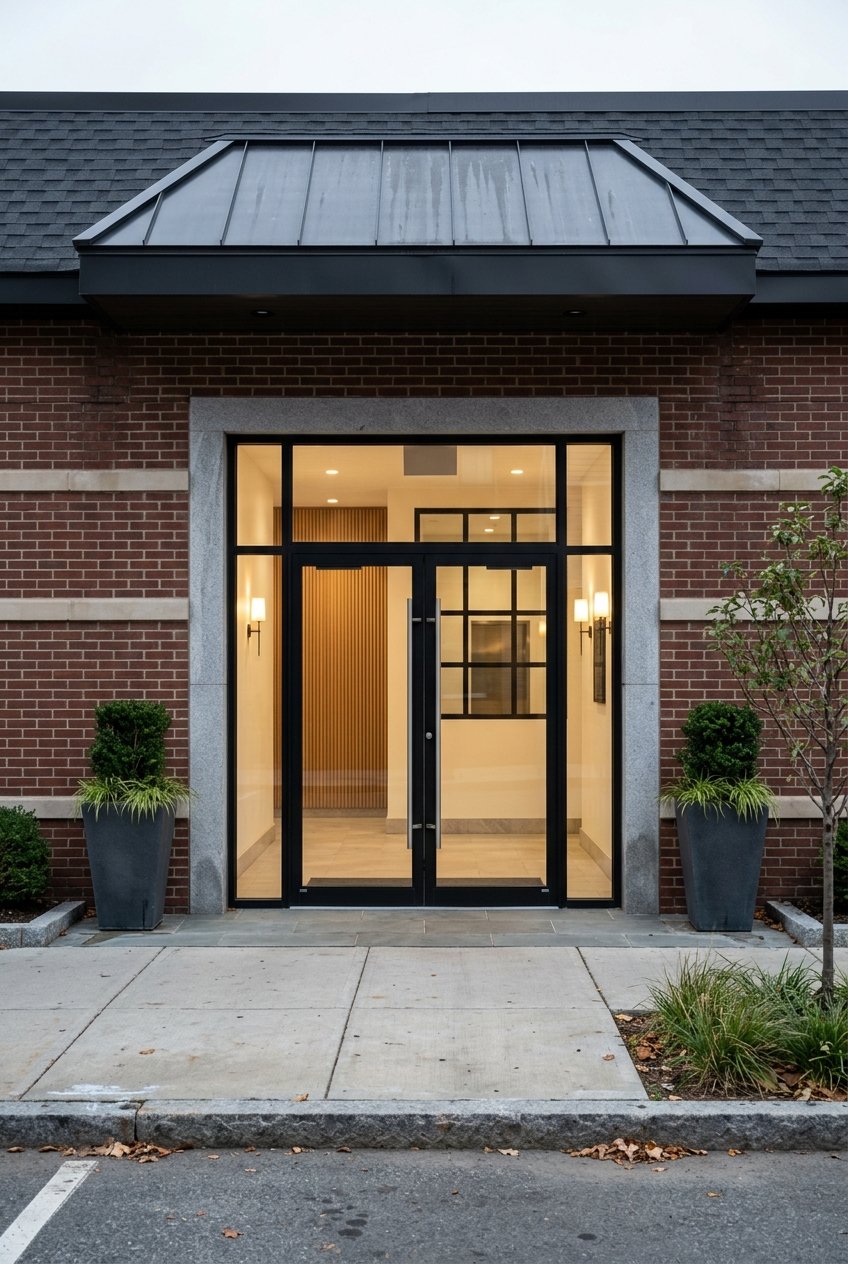
Pricing Strategy For Downtown Providence Condos
May 7, 2026
May 7, 2026
Thinking about listing or buying a condo downtown? In Downtown Providence, pricing can look confusing at first glance because two units with similar square footage can land in very different price ranges. If you understand what actually drives value here, you can price more confidently, negotiate more effectively, and avoid costly assumptions. Let’s dive in.
Downtown Providence functions like a small premium submarket within the larger Providence condo market. Redfin currently shows 10 condos for sale downtown, with a median listing price of $650,000, about 20 days on market, and roughly 4 offers per listing. By comparison, Providence overall shows 71 condos for sale with a median listing price of $442,000 and about 23 days on market.
That gap matters. It suggests downtown pricing is being pushed by limited inventory, central location, and building-specific amenities rather than by citywide condo averages alone. If you price a downtown condo based only on broader Providence numbers, you may miss the mark.
Downtown also benefits from a strong location premium. Redfin gives the neighborhood a Walk Score of 95, and the City of Providence says the Downtown Transit Connector will provide high-frequency service every five minutes between Providence Station and the Hospital District. The Riverwalk and Waterplace corridor also strengthen downtown’s appeal as a central public-space asset.
For buyers, that means you are often paying for convenience, access, and lifestyle in addition to the unit itself. For sellers, it means your location story is part of the pricing strategy, but it still needs to be supported by the right building and unit comparisons.
Not all downtown condos compete with each other in the same way. Full-service buildings and amenity-rich towers tend to occupy a different pricing lane than boutique loft buildings with historic character.
For example, The 903 Residences is marketed with a pool, fitness center, movie theater, clubhouse, 24-hour concierge, dog park, garage parking, and EV charging. Waterplace Residences highlights floor-to-ceiling glass, panoramic views, a rooftop terrace, concierge service, garage parking, and storage. Buildings like 385 Westminster and 225 Weybosset, on the other hand, lean more on historic architecture, exposed brick, high ceilings, and smaller-scale living.
That distinction matters because buyers do not evaluate these properties the same way. A character loft may win on charm and architecture, while a larger tower may command a premium for services, convenience, and amenities.
In Downtown Providence, HOA dues are not just a side note. They directly affect affordability and how buyers compare one condo to another.
Current downtown examples show a wide range of monthly dues. At 385 Westminster #3E, the HOA is $591. At The 903 #101, it is $576.48. At Waterplace #605, it is $790. At 1 West Exchange #2602, it is $1,200.
Those numbers can influence buyer demand even when list prices look competitive. A condo with a lower asking price but much higher monthly carrying costs may feel less attractive than a slightly more expensive unit with a more manageable fee structure.
What the fee covers is just as important. For example, 385 Westminster’s fee includes gas, heat, hot water, insurance, maintenance grounds, pest control, sewer, trash, and water. The 903’s fee includes clubhouse access, parking, pool, snow removal, security, trash, and water.
So a lower HOA is not automatically better. If fewer services are included, the owner may end up carrying more separate costs. Buyers usually look at the full monthly picture, not just the purchase price.
Downtown condo buyers often pay premiums for features that go beyond square footage. Better light, stronger views, higher floors, outdoor space, and deeded parking can all move value in a meaningful way.
Waterplace #605 sold for $480,000 with panoramic city, river, and College Hill views, a deeded garage space, storage, and rooftop terrace access. 1 West Exchange #2602 is currently asking $625,000 and highlights its high floor, city views, and secure garage parking. The 903 #101 sold for $415,000 with two deeded parking spaces and a private balcony.
Compare those features with a smaller boutique loft like 385 Westminster #3E, which is asking $375,000 and offers a different value proposition centered on architecture and building operations rather than resort-style amenities. The lesson is simple: buyers often assign separate value to parking, floor height, and views, even when bedroom count looks similar.
Downtown Providence has a few clear pricing ranges that can help you set expectations.
The lower end of the downtown market starts below $300,000. Recent examples include 65 Weybosset #311 at $218,000 for 265 square feet and a studio at The 903 listed at $289,900 for 563 square feet.
These homes show that downtown still has entry points, but size matters a lot in this range. Buyers here tend to weigh efficiency, monthly costs, and location more than prestige alone.
Boutique and character-driven condos often land in the mid-$300,000s to low-$400,000s. Examples include 385 Westminster #3E asking $375,000 for 800 square feet with a $591 HOA, and 225 Weybosset #12 asking $425,000 for 769 square feet with a $733 HOA.
These condos can price strongly when they offer renovated interiors, efficient layouts, and a true downtown setting. They should usually be compared against similar loft and boutique properties, not full-service towers.
The 903 appears to have a useful pricing cluster in the $415,000 to $460,000 range for units around 1,076 to 1,275 square feet, with HOA dues around $576. That range is important because it shows how a larger amenity package can support value while staying relatively accessible compared with some higher-end downtown buildings.
For both buyers and sellers, this creates a strong benchmark. If a unit has standout parking, layout, or condition, it may justify pushing toward the top of that range or beyond.
The premium high-rise category pushes well above the neighborhood median for the right product. Waterplace #605 sold at $480,000 for 879 square feet, 100 Exchange #1506 is asking $539,000 for 907 square feet, and 1 West Exchange #2602 is asking $625,000 for 1,038 square feet.
In this tier, buyers are often paying for more than interior finish. Building reputation, service level, views, and parking packages can play a major role in the final number.
Downtown premiums are not limited to towers. Larger lofts and boutique condos can also push into the upper tier.
For example, 755 Westminster #404 is asking $564,900 for 1,700 square feet, while 200 Exchange #215 is asking $775,000 for 1,542 square feet. These examples show that size, finish, and uniqueness can create strong pricing even outside the most amenity-heavy buildings.
If you are selling a downtown condo, the most important step is identifying the right comparable set. In this neighborhood, that usually means looking at units in the same building or in a very similar building class, with a comparable HOA structure, similar floor level, similar parking, and similar views.
Using broad city comps can lead to a weak pricing strategy. Downtown is simply too specialized for that. A boutique loft, a mid-rise with practical amenities, and a full-service tower may all appeal to different buyers and trade at different levels, even if the square footage is close.
Overpricing can also be more costly in a tight submarket. With only 10 active downtown condos and a median list price of $650,000, it is easy to price a listing outside the most active buyer pool. Once that happens, a condo may sit longer and lose momentum.
A strong seller strategy usually starts with accurate positioning, then supports that price with clear marketing around the features buyers actually value. That may include parking, city views, outdoor space, updated finishes, or the convenience of a particular building’s service package.
For some sellers, a more tailored launch strategy may also help. James Hall offers hands-on listing guidance, strong digital presentation, negotiation support, and Compass tools like Concierge for pre-listing improvements and Private Exclusives for more discreet opportunities when that approach fits the property and the seller’s goals.
If you are buying downtown, focus on total monthly cost, not just the asking price. HOA dues are a recurring expense, and they can vary dramatically from one building to another.
You should also ask what those dues actually cover. Utilities, insurance-related building costs, amenity access, parking, and maintenance may or may not be included. Two condos with similar prices can feel very different once those details are added up.
It is also smart to review whether there are any special assessments, how parking is handled, and whether the unit’s premium features truly justify the price difference from nearby alternatives. In a market like Downtown Providence, those details often explain why one unit sells quickly while another struggles.
If you are relocating or buying from outside Rhode Island, having local guidance can be especially helpful. Building-by-building differences downtown are significant, and understanding those nuances can help you avoid overpaying or overlooking a better fit.
Downtown Providence condo pricing is rarely about square footage alone. It is about the full package: location, building type, monthly carrying cost, service level, views, parking, and how well the home matches current buyer demand.
If you want a pricing strategy grounded in the realities of the downtown market, James Hall offers responsive, high-touch guidance for both buyers and sellers across Providence.
Stay up to date on the latest real estate trends.

Get assistance in determining the current property value, crafting a competitive offer, writing and negotiating a contract, and much more. Contact me today.