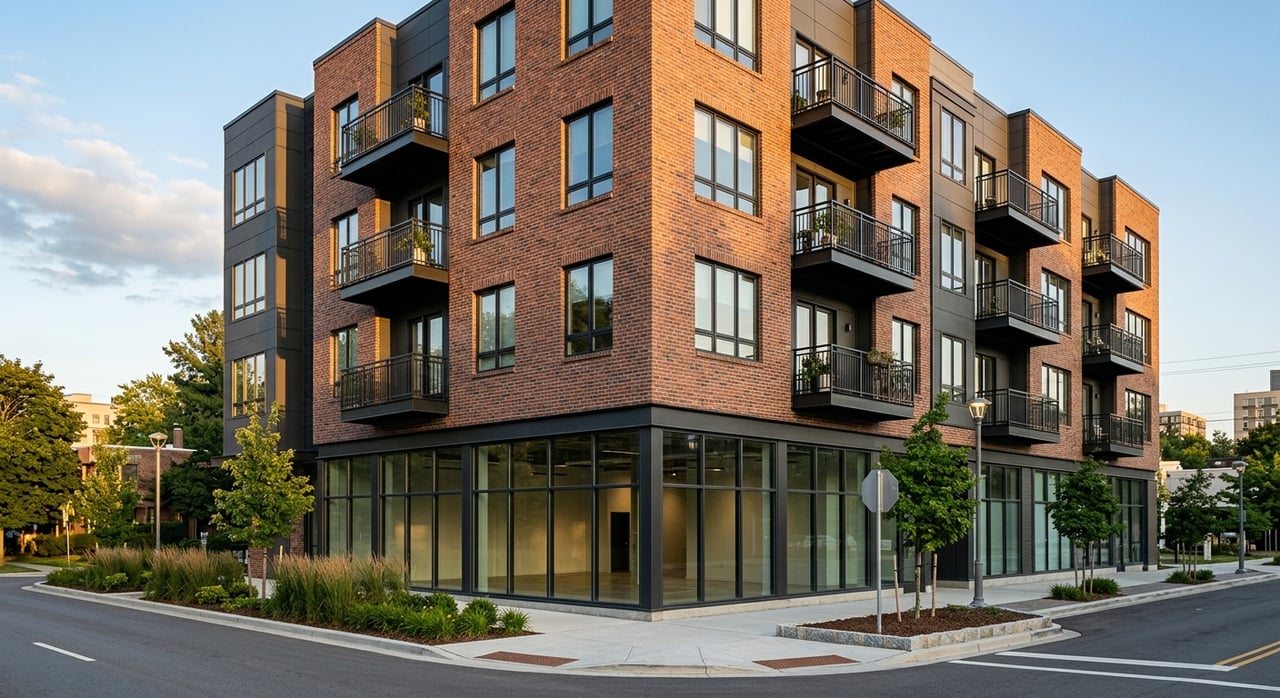
A Guide to New Providence County Housing Developments
May 28, 2026
May 28, 2026
If you have been watching Providence County real estate, you may have noticed that new development here does not look like a wave of flashy high-rises. Instead, the current pipeline is shaped by practical infill projects, adaptive reuse, and mixed-use buildings that add housing while making more use of older sites and commercial corridors. If you want to understand what that means for Providence buyers, sellers, and relocating households, this guide will walk you through the biggest announced projects and the trends behind them. Let’s dive in.
Providence County’s recent housing pipeline is led largely by publicly announced and publicly financed projects rather than speculative tower development. According to the research, two themes stand out again and again: infill on vacant or underused parcels, and adaptive reuse of older buildings.
That pattern lines up with Rhode Island’s 2025 zoning templates, which support residential development in commercial districts, mixed-use development, medium- to high-density housing, and adaptive reuse. RIHousing also reported that Providence added the largest number of newly deed-restricted units in the state in 2024, which helps explain why the city remains the center of activity in the county.
A big reason for this project mix is funding. Many of the developments in the pipeline rely on LIHTC, RIHousing loans, state recovery dollars, or city housing funds, so affordability restrictions are often built in from day one.
In practical terms, that means many announced projects serve households between 30% and 80% of area median income, with some mixed-income developments also including middle-income or market-rate units. For buyers and sellers, that matters because it shows the county is not adding just one kind of housing. It is adding a broader range of homes and building formats.
Providence has the largest concentration of current projects in the county. While each development has its own scale and purpose, together they show where the local market is heading.
Omni Newark Apartments, which broke ground in April 2026, is a five-story mixed-income infill project in the Valley and Eagle Square area. It will include 52 units, with 41 units at or below 60% AMI, 11 units at or below 80% AMI, and 8 project-based vouchers.
The project stands out because it is being built on a former bakery and multifamily site. It also includes ground-floor parking plus community and commercial space, with a completion target of July 2027.
At 371 Pine Street, Crossroads Health & Housing is planned as a five-story mixed-use building with 35 units. All units are set at or below 30% AMI, including 16 efficiencies and 19 one-bedroom apartments.
The building also includes resident common space, Crossroads offices, and 2,500 square feet of commercial space for health and wellness partners. This is a good example of how some new Providence projects are pairing housing with on-site services and street-level activity.
Parcel 9 is one of the clearest mixed-use examples in Providence’s current pipeline. Phase I includes 66 units and a Head Start center, while Phase II adds 61 units with 36 affordable units, 13 units at 100% AMI, and 12 market-rate units.
The project also includes project-based vouchers and veteran services. For anyone tracking neighborhood development patterns, Parcel 9 reflects a broader move toward housing that is integrated with childcare and support services rather than standing alone.
Paragon Mill brings adaptive reuse into focus. This project will transform historic mills near the Woonasquatucket River into 101 residential units, with 44 units at or below 60% AMI and the rest below 120% AMI.
It also includes a pocket park, bike-path extension, commercial space, a river overlook, and fitness and community areas. This is one of the more visible examples of how Providence is reusing older industrial properties instead of starting from scratch on undeveloped land.
Postal Apartments converts a 1949 post office into 12 units in Olneyville Square. The housing mix includes 4 units at 80% AMI and 8 market-rate units.
In addition to housing, the project adds 2,000 square feet of retail and restaurant space. Even though it is smaller than some other projects, it shows how compact redevelopment can still reshape an active neighborhood node.
321 Knight Street will add 41 affordable units in a podium-style infill development. The project includes larger-family and disability-focused layouts, along with parking, community space, and ground-level commercial space.
This matters because it highlights another key theme in the county pipeline: a wider range of unit types. The current list of projects is not limited to studios or one-bedrooms. It includes layouts designed for different household needs.
Not every important project is brand-new construction. Pocasset Manor is an 82-unit senior and disabled housing rehabilitation project that adds green and energy-efficiency upgrades while extending affordability for 30 years.
That is a reminder that preservation remains part of the housing story in Providence. The region is not only building new homes, but also modernizing existing housing and keeping it in service for the long term.
While Providence has the deepest pipeline, several other communities in Providence County are also seeing meaningful development. These projects help paint a fuller picture of how housing supply is changing across the county.
Dexter Street Commons is planned for the former Conant Thread site in Pawtucket. The project includes 150 rental units and 7,000 square feet of ground-floor retail, with all units anticipated to be affordable to households up to 120% AMI and 30 deed-restricted units.
Its location near the Pawtucket-Central Falls station gives it a transit-oriented angle. The plans also include a rooftop deck, concierge service, an on-site restaurant, and retail amenities.
The Central Street Development spans 12 locations across Central Falls and Pawtucket, delivering 62 new and preserved rental homes. It also includes a Homeownership and Financial Education Center.
RIHousing and local officials described it as a mixed-income, mixed-use project near commuter rail and retail. The scattered-site approach makes it different from a single-building project, but it still fits the broader county trend toward flexible reuse and community-centered development.
Center City Apartments is a large redevelopment effort along the Taunton Avenue corridor in East Providence. The plan calls for 144 units across two new buildings and an existing rehabilitation, with the 9% phase including 95 units made up of 41 new units and 54 rehabilitated units.
This project stands out because it is tied to a blighted-site redevelopment. It reflects the way many county projects are focused on reinvesting in underused locations rather than expanding outward.
East Point-Woodward includes 69 units overall, with the East Providence portion consisting of a 39-unit four-story building that includes 35 one-bedroom and 4 two-bedroom units. The broader plan mixes single-family, duplex, and apartment units with open spaces, walking trails, and bike lanes.
That makes it a useful example of how some projects are thinking about housing variety and site design together. It is not just about unit count, but also about how a site connects to daily life and movement.
The Village at Manville will bring 72 affordable units to Lincoln across three residential buildings and one community building. Eight units are reserved for households at or below 30% AMI.
The project is notable because it combines new construction with a dedicated community building and supportive housing elements. It continues the pattern of development that blends housing with shared amenities and services.
Lincoln’s pipeline also includes Walker Lofts, a 126-unit historic mill rehabilitation with 32 affordable units near the Pawtucket-Central Falls commuter station. Lonsdale Memorial Lofts will convert the former Lincoln Memorial School into 26 units, including studios, one-bedroom, and three-bedroom homes for households at or below 80% AMI.
On the ownership side, smaller examples include Ivy Place in East Providence, a 13-unit homeownership initiative completed in 2024, and Middle Street Homes in Pawtucket, which delivered five two-family homes sold to first-time buyers with second units as market-rate rentals. These projects are smaller, but they show that the county pipeline is not limited to rental housing alone.
For buyers, the biggest takeaway is variety. The county’s announced projects include efficiencies, one-bedrooms, two-bedrooms, three-bedrooms, four-bedrooms, rental housing, supportive housing, and some ownership-oriented development.
That does not mean every project will directly affect the for-sale market in the same way. But it does suggest a more layered housing landscape, especially in and around Providence, where new development is adding different housing formats and reactivating older sites.
For sellers, these projects can influence how buyers view a location over time. Ground-floor retail, restaurant space, childcare, health-related services, community rooms, bike-path connections, pocket parks, and riverfront features can all change how an area functions and how people use it day to day.
Another important point is that much of this pipeline is adaptive reuse. Mills, post offices, schools, former shelters, and industrial parcels appear repeatedly in the project list, which tells you that redevelopment in Providence County often happens through reinvention rather than expansion.
That is especially relevant if you own an older home, condo, or multifamily property in Providence or nearby communities. Buyers are often drawn to areas where public and private investment is visible, and where neighborhood amenities are gradually becoming more layered and convenient.
Reading a project list is one thing. Understanding what that pipeline may mean for your purchase, sale, timing, or pricing strategy is something else.
If you are buying, new development can affect your search in a few ways. It may shape future neighborhood activity, create new housing competition in some segments, or increase interest in nearby homes that offer established character and location.
If you are selling, knowing which projects are moving forward and what features they bring can help you frame your property more effectively. In Providence County, that could mean highlighting access to commercial corridors, adaptive-reuse districts, transit-connected areas, or established residential blocks near active investment.
This is where a local, hands-on approach matters. You want guidance that goes beyond headlines and looks at how development trends connect to your specific goals, price point, and timeline.
Whether you are planning a move in Providence, exploring nearby county communities, or preparing to list, James Hall can help you make sense of the market with clear advice, responsive service, and a strategy built around your next step.
Stay up to date on the latest real estate trends.


Get assistance in determining the current property value, crafting a competitive offer, writing and negotiating a contract, and much more. Contact me today.