Blackstone Boulevard in Providence: What Locals Should Know
August 20, 2026
August 20, 2026
As Turnto10 reported, the night before a sinkhole opened at Blackstone Boulevard and Irving Avenue, Josh Reno went out for his usual run anyway. He lives on Irving, a block off the median path he has covered more times than he could count, and a summer thunderstorm did not seem like a reason to skip it. "I went for a run during it and I was wiping out," he told Turnto10 the next morning. "I did like a mile and a half and it wasn't worth it." By the time he turned back, the roadbed under the intersection had given way, and what he found the next day was a hole roughly 25 feet across, filled and covered by city crews working through the night.
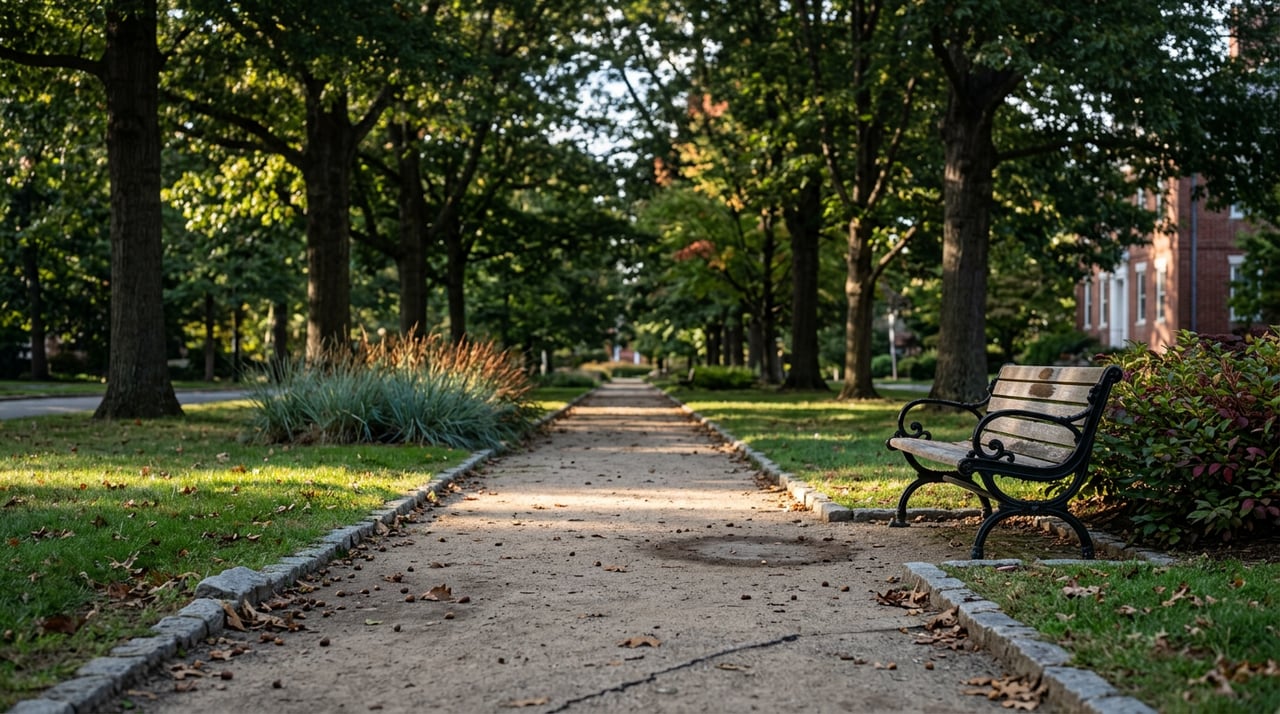
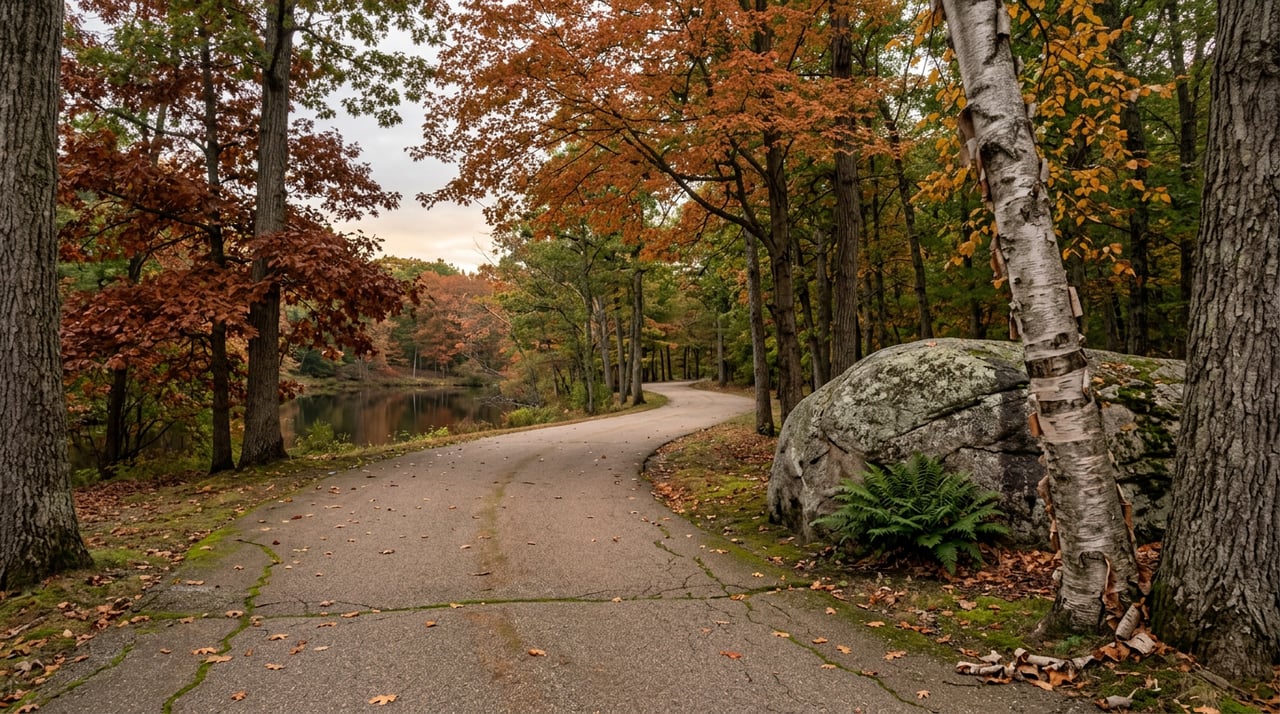
If you live along the boulevard, you already know the two things that make it worth living near. There is the median itself, the trees, the benches, the path that turns a commute into a walk. And there is Lippitt Park at the north end, where Saturday mornings still mean produce stands and live music. What the July storm exposed, quite literally, is that these two things you love about the boulevard and the ground you're standing on to enjoy them are not maintained by the same people, or even the same century of planning.
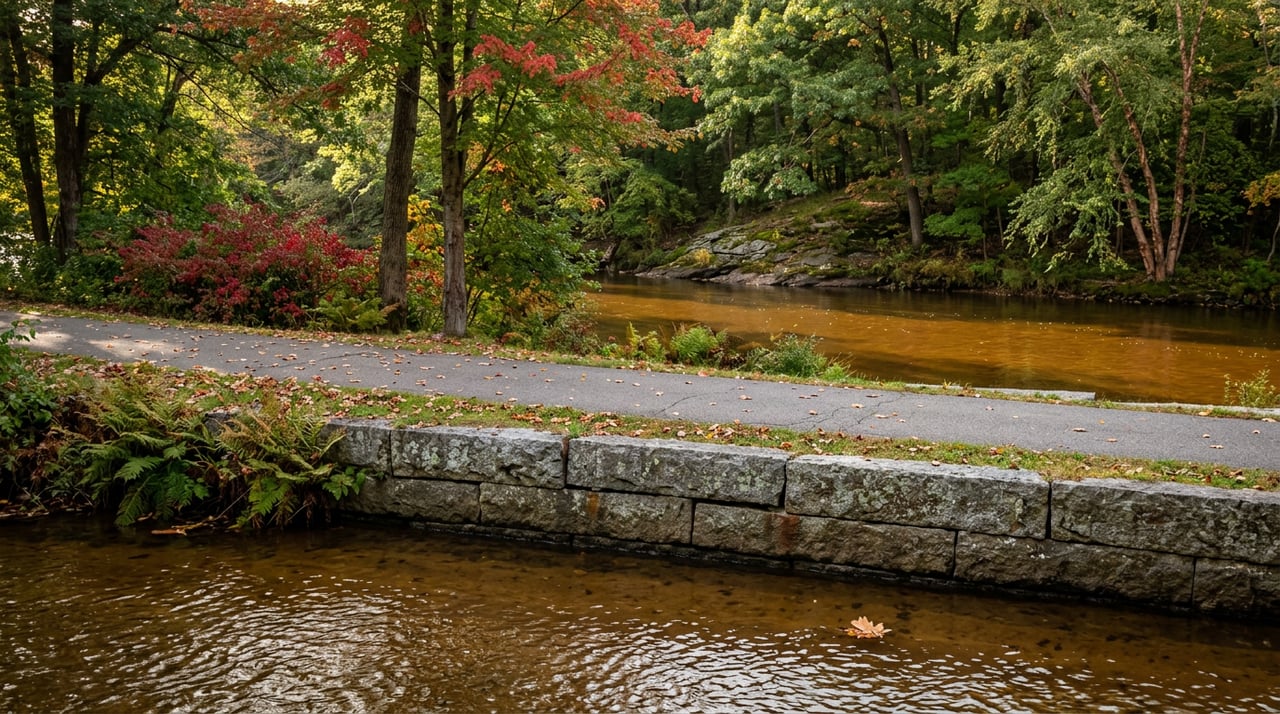
Blackstone Boulevard is not a street with trees along it. It is a 1.6-mile, 100-foot-wide median park bordered by two separate roadways, each with its own bike lane and traffic lane, and it holds a spot on the National Register of Historic Places. Rhode Island's first designed parkway, it was laid out in 1886 by landscape architect H.W.S. Cleveland, who died before construction finished, leaving the job to the Olmsted Brothers firm, with John Charles Olmsted and Carl Rust Parker taking the lead on the planting plan.
That history explains why the boulevard feels different from an ordinary tree-lined street. What it does not explain is who keeps it that way now. The answer is not a city parks crew. It is the Blackstone Parks Conservancy, a volunteer organization that has planted nearly 300 trees and shrubs on the boulevard since starting a reforestation project in 2003, working in partnership with the city's Parks Department but funded largely by donations and grants. The Conservancy also maintains the rustic stone shelter partway down the median, built more than a century ago as a trolley stop, and keeps the summer concert series going. Every bench you sit on to catch your breath mid-run was likely donated through that same effort, not budgeted by the city.
None of this is a complaint about city government. It is simply the arrangement: the canopy over your head on a July evening is the product of two decades of unpaid neighbor labor, layered on top of a nineteenth-century design that nobody had to reinvent because it already worked.
Walk to the boulevard's north end, where it meets Hope Street, and you land at Lippitt Memorial Park, home to the Hope Street Farmers Market. This is not a pop-up. It is a 32-year-old, farmer-run cooperative that started life as the DownCity Farmers Market Cooperative in Kennedy Plaza, relocated to Hope High School, and finally settled at Lippitt Park in 2008. It runs Saturdays from 9 a.m. to 1 p.m. through the end of October, with the concurrent Providence Artisans Market filling out the southern end of the park on the same schedule.
The vendor list reads like a map of the state's small farms rather than a generic produce stand roster. Regulars include:
Most sell through the Southside Community Land Trust network, which means the money you spend on a Saturday morning tends to go directly back to small growers rather than through a middleman. If you finish shopping and want something cold, Three Sisters Cafe sits right across the street with homemade ice cream, and India Restaurant nearby is the standing answer for a takeout lunch you can eat on one of the park's picnic tables.
Like the tree canopy a mile south, this market is not a municipal program. It is a cooperative that farmers built and still run themselves, which is part of why it has survived three locations and three decades without losing its character.
Here is where the boulevard's other identity shows up. On July 21, 2026, a line of severe thunderstorms moved through Providence, and the ground gave way at the intersection of Blackstone Boulevard and Irving Avenue, an area already under active construction. Mayor Brett Smiley said crews had been working on the city's aging water and sewer infrastructure there, and because the work was happening during daylight hours, the metal plates covering the open trench had not yet been fully secured when the storm hit.
City Councilor Jill Davidson kept neighbors updated as it unfolded, and Chief Engineer Craig Hochman was on-site assessing the damage alongside Providence police. By Wednesday morning the sinkhole, roughly 25 feet in diameter, had been filled and covered, and traffic was being diverted through Wayland Square while crews resumed the underlying sewer project. Neighbors who came out to see it for themselves were not entirely surprised.
"It's incredible how big and deep it is," Laura Stark, who lives nearby, told Turnto10. "It's just enormous. I just can't believe it."
The sewer and water work that caused this was already underway before the storm, which tells you something the median park's tidy paths do not: the pipes beneath this stretch of the East Side are old enough that the city is actively in the middle of replacing them. Weeks later, that underlying project is still in progress, and the detour signs routing drivers through Wayland Square may be around for a while longer as the more permanent fix gets finished.
Put those two facts side by side and the boulevard starts to look less like a single amenity and more like two overlapping systems wearing one address. The part you love, the canopy, the benches, the Saturday market, exists because volunteers and farmers have spent decades building and maintaining it themselves, often independent of city budgets. The part that occasionally interrupts your morning, a work zone, a detour, a sinkhole after a hard rain, exists because the infrastructure underneath predates most of the people currently walking over it, and the city is in the middle of catching up.
Neither fact should change how you use the boulevard day to day. The market at Lippitt Park sits at the opposite end from the Irving Avenue work zone, so Saturday mornings there haven't skipped a beat through any of this. But it is worth knowing, next time you're rerouted through Wayland Square or you notice a fresh sapling staked along the median, that you're looking at two very different kinds of upkeep, one paid for by taxes and one supported by neighbors who volunteered to plant trees.
If you're the kind of East Side resident who already has an opinion about which end of the boulevard has better shade, we'd probably get along. We spend a fair amount of time on that same stretch, and if you ever want a neighbor's read on what's shifting around the East Side, from a construction detour to a listing three doors down, James Hall is easy to reach. Schedule a free consultation anytime you want to talk shop over coffee, no obligation attached.
Stay up to date on the latest real estate trends.
Get assistance in determining the current property value, crafting a competitive offer, writing and negotiating a contract, and much more. Contact me today.