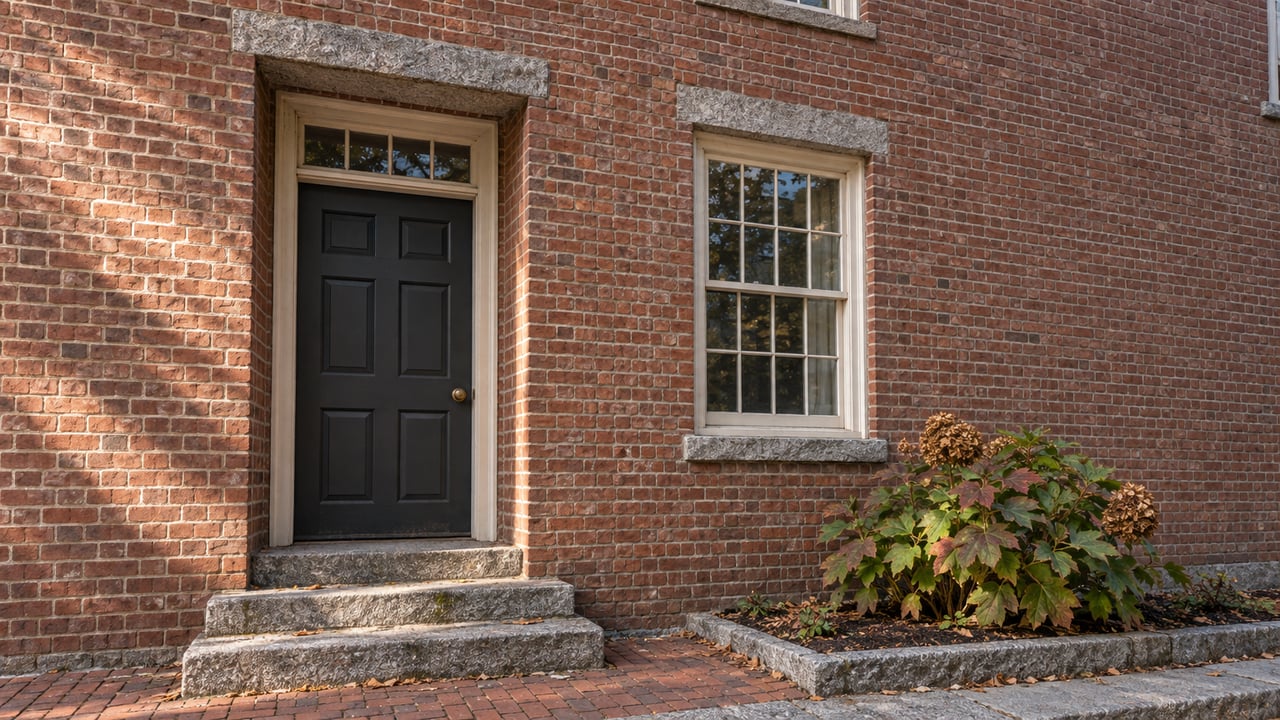
The Historic District Review Isn't What Delays a College Hill Sale. The Missing Paperwork Is.
October 1, 2026
October 1, 2026
On July 27, 2026, the Providence Historic District Commission's staff filed a report on a straightforward case at 42 Hidden Street. The owners, Geoffrey and Brandy McKinnon, wanted to tear down a one-story wood garage that had never been identified as contributing to the College Hill National Register district, then build new and add a pool. Staff recommended splitting the demolition from the new construction, the Commission agreed, and granted final approval in a single meeting. Total time from application to decision: one hearing.
That case is the version of historic review that almost never makes it into a listing conversation, because it moved fast and cleanly. The version that does show up mid-transaction is different. It's the porch enclosure from 2004, the vinyl replacement windows from a decade before that, the deck addition nobody pulled a permit for because the seller at the time didn't know College Hill required one. None of that shows up on a for sale sign. It shows up during due diligence, when a title search or a buyer's inspector asks the city whether the work on file matches what's actually on the house.
The Providence Historic District Commission was created in 1960 under state law to oversee exterior changes across the city's nine Local Historic Districts, a footprint of roughly 2,635 properties. College Hill is the largest of them by a wide margin, with more than 900 properties inside its boundary, so most East Side sellers with an older home are working inside this system whether they've thought about it or not.
The mechanics are more predictable than most sellers expect. The review timeline isn't open ended. Applications headed to a public hearing, according to the Providence Historic District Commission's standards guide, need to be filed at least 14 days before the meeting, and if the Commission simply doesn't act within 45 days, the ordinance treats the application as approved by default unless both sides agree to an extension. A denial can be appealed to the Zoning Board within 20 days, then to Superior Court and the state Supreme Court if it goes that far, though most cases never leave the Commission's own hearing room.
For a seller planning ahead, the review itself is a schedule you can build around, not a wildcard. Start the conversation with Commission staff two to three months before you want a project finished and the clock works in your favor.
Not everything on a College Hill exterior needs a hearing at all. Light fixtures, door hardware, window boxes, storm windows, garden furnishings, temporary signs, irrigation systems and paint color are all exempt from PHDC review outright. As PVDEye reported, basic repairs, awnings, fences, gates and gutter work fall into a lighter staff level track that doesn't require a public meeting either.
That list matters more to a seller than it sounds. It's the difference between a two week refresh before listing photos and a two month wait. Repainting trim, swapping a dated porch light, adding a window box or replacing a storm door are all moves a seller can make on their own timeline without touching the Commission's calendar. It's also exactly the kind of pre-listing work Compass Concierge is built to front the cost on, so the improvements that actually move the needle on a College Hill listing don't have to wait on anyone's approval.
Here is the part that doesn't show up in most explanations of how historic review works. The Commission's process is fast when an owner starts it. The risk on the East Side is the work nobody started.
Unpermitted exterior changes in a local historic district, whether they happened last year or twenty years ago under a previous owner, can surface during due diligence. The city's Department of Inspection and Standards flags any property inside PHDC jurisdiction during a building permit application. If the paper trail doesn't match what's on the house, the fix isn't a phone call. As Hill & Harbor notes, unpermitted work can also complicate the sale itself and the title insurance that goes with it.
None of this means a College Hill seller is likely to face enforcement out of nowhere. It means the due diligence period, not the listing photos, is where a decades old shortcut finally gets noticed. A seller who orders a title search and confirms permit history before listing, rather than after an offer is accepted, controls the timeline instead of reacting to it.
As PVDEye reported, the Commission's willingness to say no, even to a project that's legal by zoning, showed up clearly in April 2024. Developer Dustin Dezube of the Providence Group brought a conceptual proposal to add four new structures to a nearly 30,000 square foot lot on Angell Street, land large enough to be subdivided into five lots under the neighborhood's own R-1 minimum of 5,000 square feet. The site includes the 1796-97 Captain George Benson House, one of the more significant Federal period buildings on the East Side. Zoning alone would have allowed the subdivision. The Commission still needed to weigh in on what would actually get built around a landmark house, and the project became one of the few outright denials of that year.
The lesson for anyone buying or selling near a landmark property isn't that redevelopment is impossible. It's that being allowed to build under zoning and being approved to build under historic review are two separate tests, and a contract that assumes the second follows automatically from the first is building in a risk that doesn't need to be there.
Does an interior renovation need Commission approval? Generally no. PHDC review covers exterior changes visible from a public way. Interior kitchen and bathroom updates typically move forward on ordinary building permits without ever reaching the Commission, unless the work removes historic material that contributes to the building's character.
What if the unpermitted work was done by a previous owner? A pre-listing permit check matters more on the East Side than in a neighborhood without historic district rules.
Can paint color hold up a sale? No. Paint colors are explicitly exempt from PHDC review in Providence, along with light fixtures, door hardware and a handful of other cosmetic items.
James Hall works with East Side sellers on the timing questions that matter before a home ever hits the market, from what a historic property's permit history actually says to which pre-listing repairs are worth doing first. If you're weighing a sale on College Hill or anywhere else on the East Side, James Hall offers a free consultation to walk through your specific property before you list.
This article is general information, not legal, tax or financial advice. Consult a qualified professional about your situation.
Stay up to date on the latest real estate trends.


Get assistance in determining the current property value, crafting a competitive offer, writing and negotiating a contract, and much more. Contact me today.